AFS Medical Services: the patient journey, from paper registers to a platform.
An inter-company medical service with 4 branches and 7 satellite offices. In nine months, we went from a field audit to a site open to the public, where patient waiting time is measured for the first time.
- 4 branches, 7 satellite offices
- Field audit: February 2026
- Live since 2 November 2026
- 260 patients received in 7 working days
8 min
median wait before the doctor's call, measured for the first time
2 Nov.
public opening on the planned date
28
changes requested by the teams, delivered in 10 days
500+
member companies migrated from heterogeneous files, and 11 months of paper registers
A medical service for hundreds of companies.
AFS Medical Services is an inter-company medical service: member companies send their employees there for consultations and care. The network has 4 branches and 7 satellite offices, and more than 500 member companies.
At every visit, reception must know whether the person is entitled to care. That information comes from the nominative employee declarations (DNS) each company sends in, as Excel files.
Time lost at every desk, and no way to measure it.
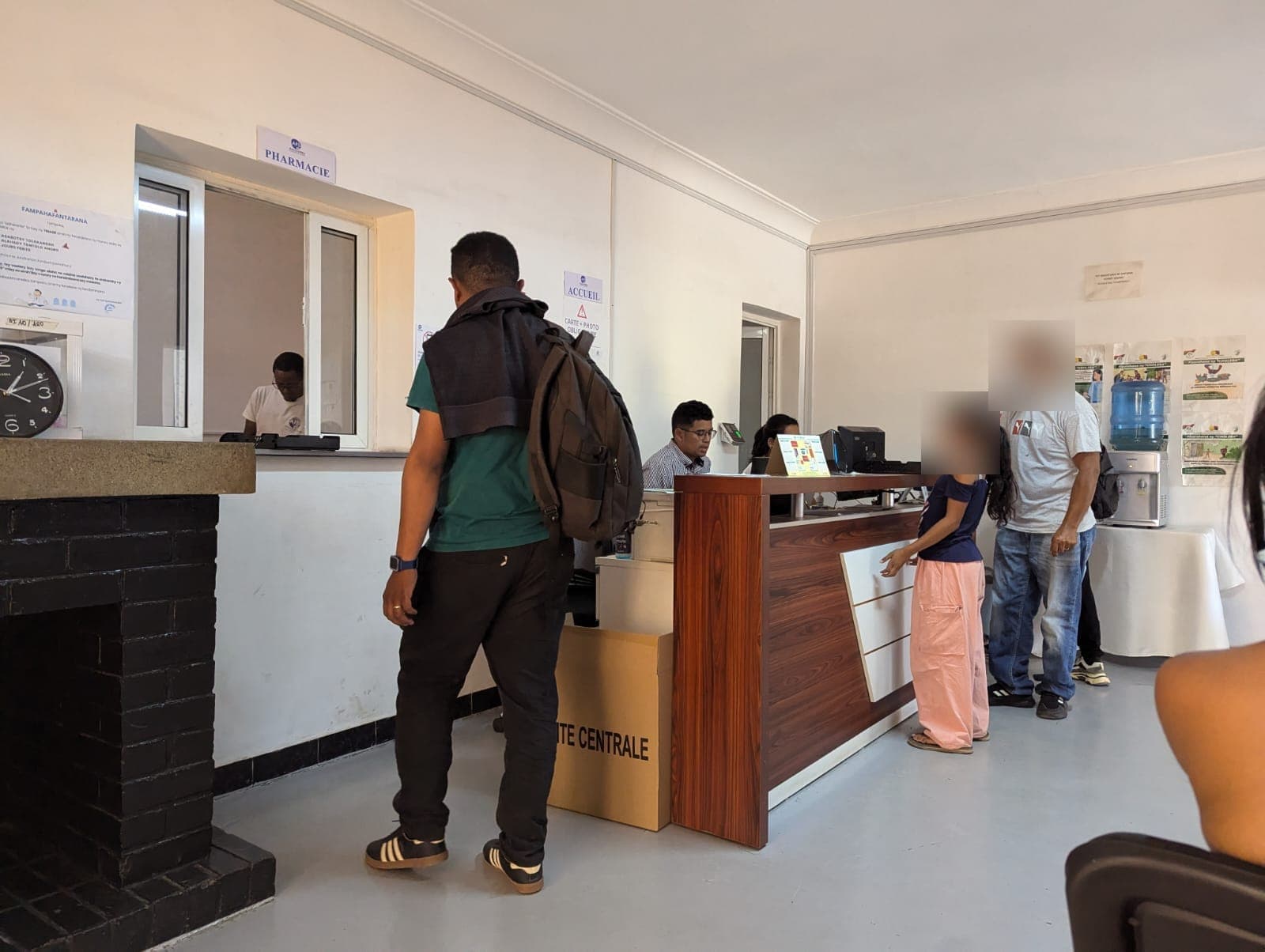
- Registering a patient took 1 to 3 minutes of searching through Excel files, to find the person and check their entitlement.
- Tracking relied on paper registers. Out of 111,921 recorded visits, the exit time was noted only 79 times: patient waiting time simply could not be measured.
- Company declarations arrived in widely different Excel formats, which made every update of entitlements slow and fragile.
Our five-step method, applied at AFS.
- 1
We quantify before we build.
In February 2026, we audited 4 of AFS's processes in the field and delivered 5 requirement documents. Every processing time was measured at the desk, not estimated in a meeting.
- 2
We steer with management.
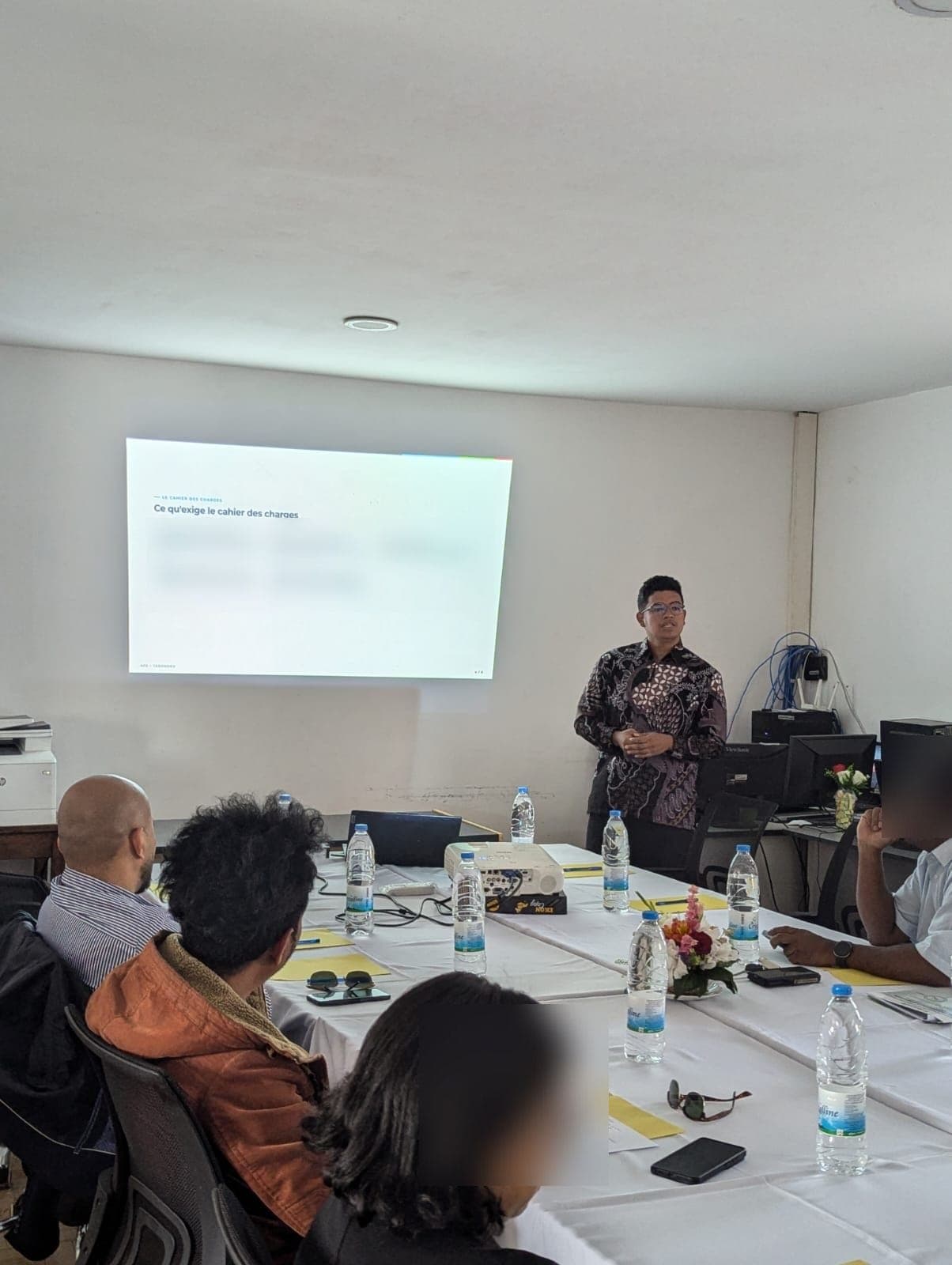
Priorities were decided together with management. On 8 October 2026, we presented the platform to the board, with a live demo.
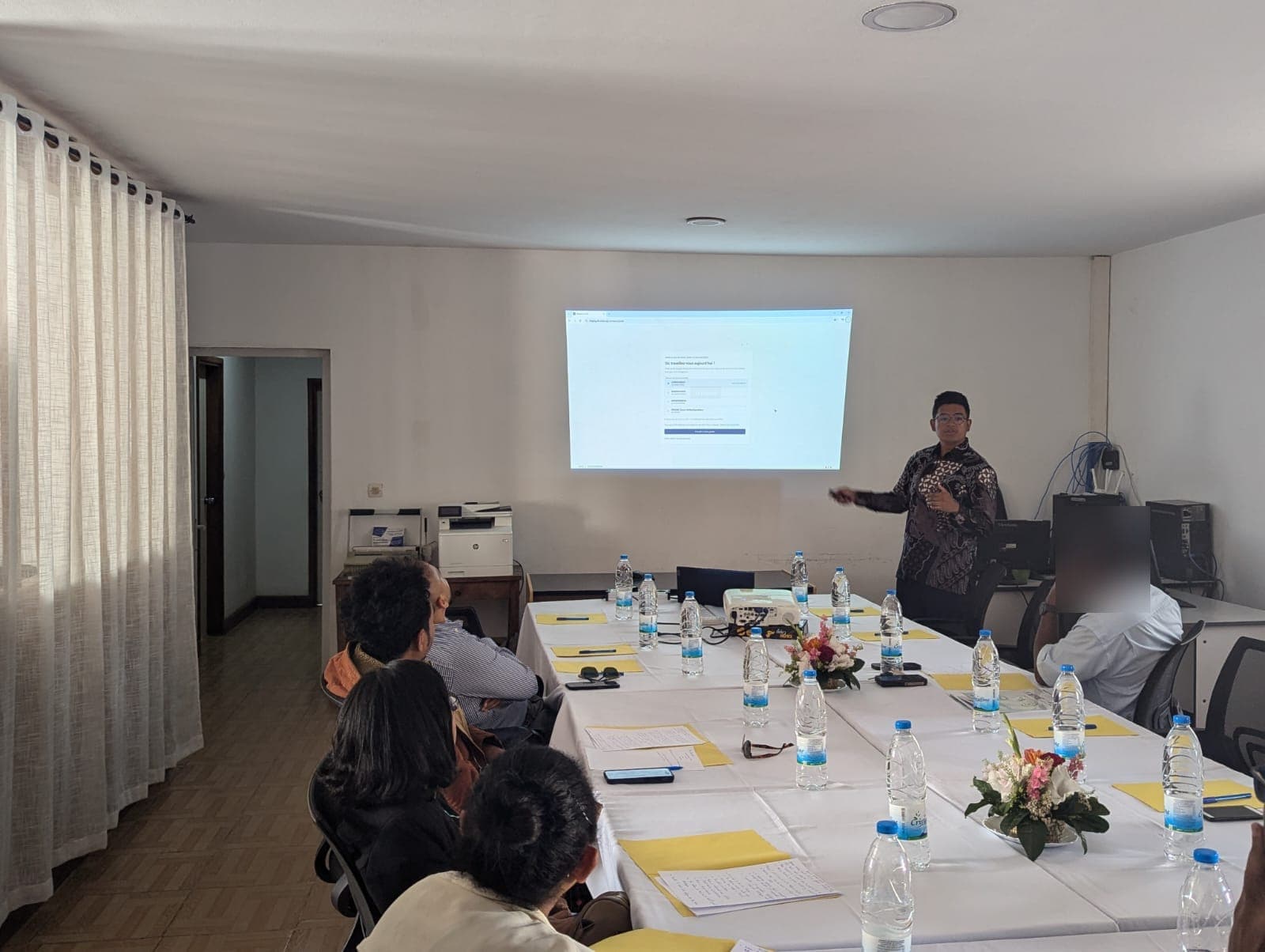
Live demo in front of the board, 8 October 2026. - 3
We deliver step by step.
We started with a single module, the patient journey, on a single pilot site. Production on 28 October, opening to the public on 2 November. The other modules follow, one at a time.
- 4
We train your teams.
Every role was trained on site before opening, with guided walkthroughs, manuals and a demo video.
- 5
You become more efficient.
From the first week, management has figures it never had before: patients per day and waiting time.
A web platform for the whole patient journey.
- Reception
- The patient is found with a simple search instead of browsing Excel files, and each patient has a single record, whatever the site.
- Eligibility checks
- Entitlements are computed from each company's DNS. More than 500 member companies and their employee lists are in the platform. A safeguard blocks any suspicious import before it changes entitlements.
- Queue
- Each patient gets a visit number based on their queue. The journey is time-stamped, from arrival to call.
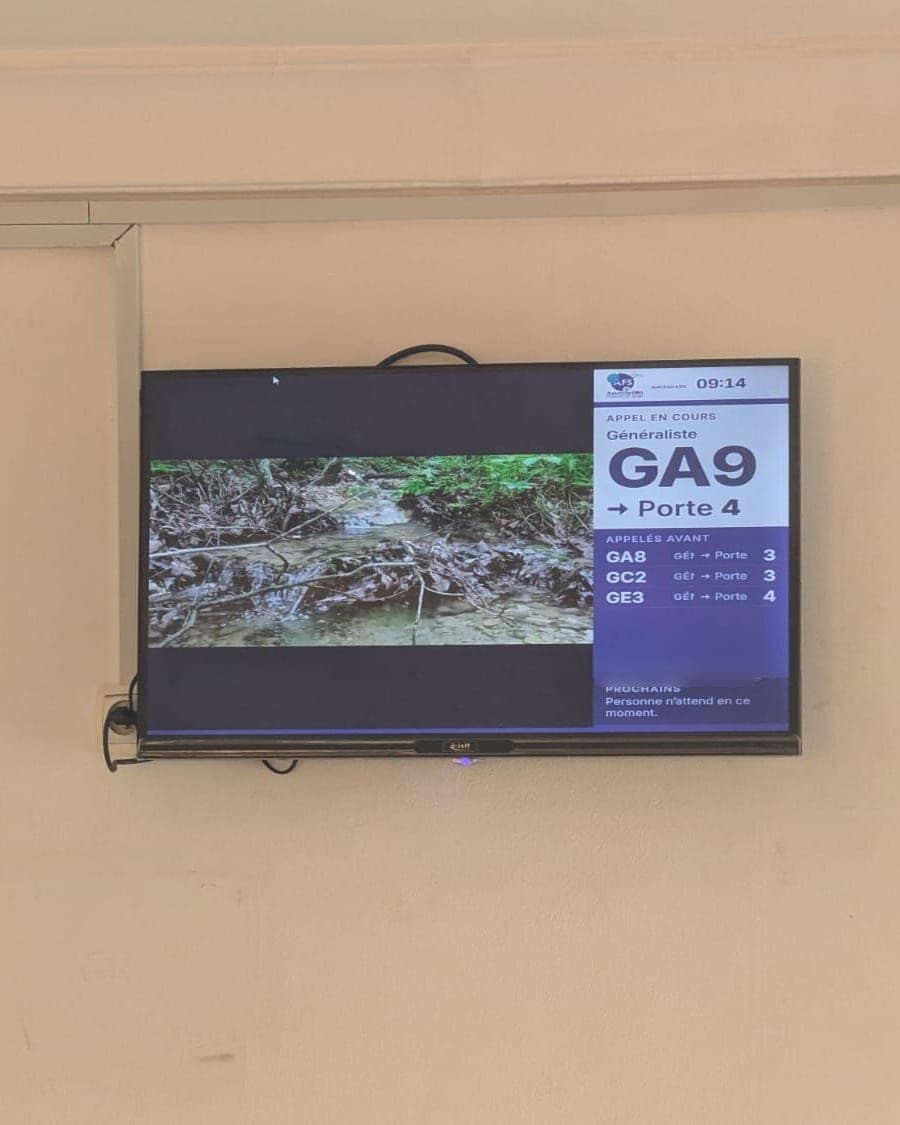
- Call screen with voice announcement
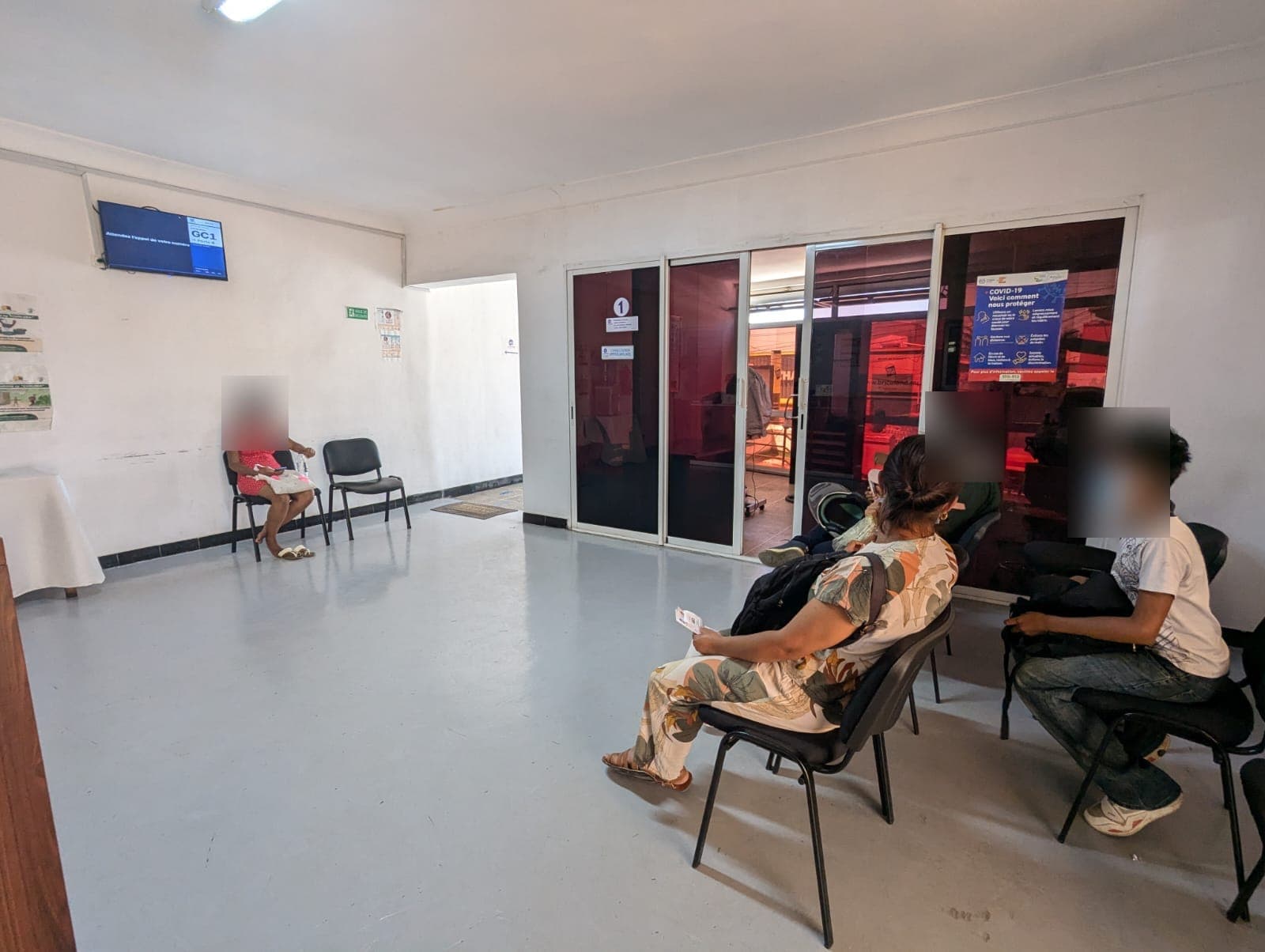
- When the doctor calls the next patient, the number appears with the consulting-room door and a voice announcement plays. It replaces paper tickets, and no patient name ever appears on screen.
- Cash desk
- Payment happens in the same platform, as part of the same journey.
Andraharo, 2 November: first patient 41 minutes after launch.
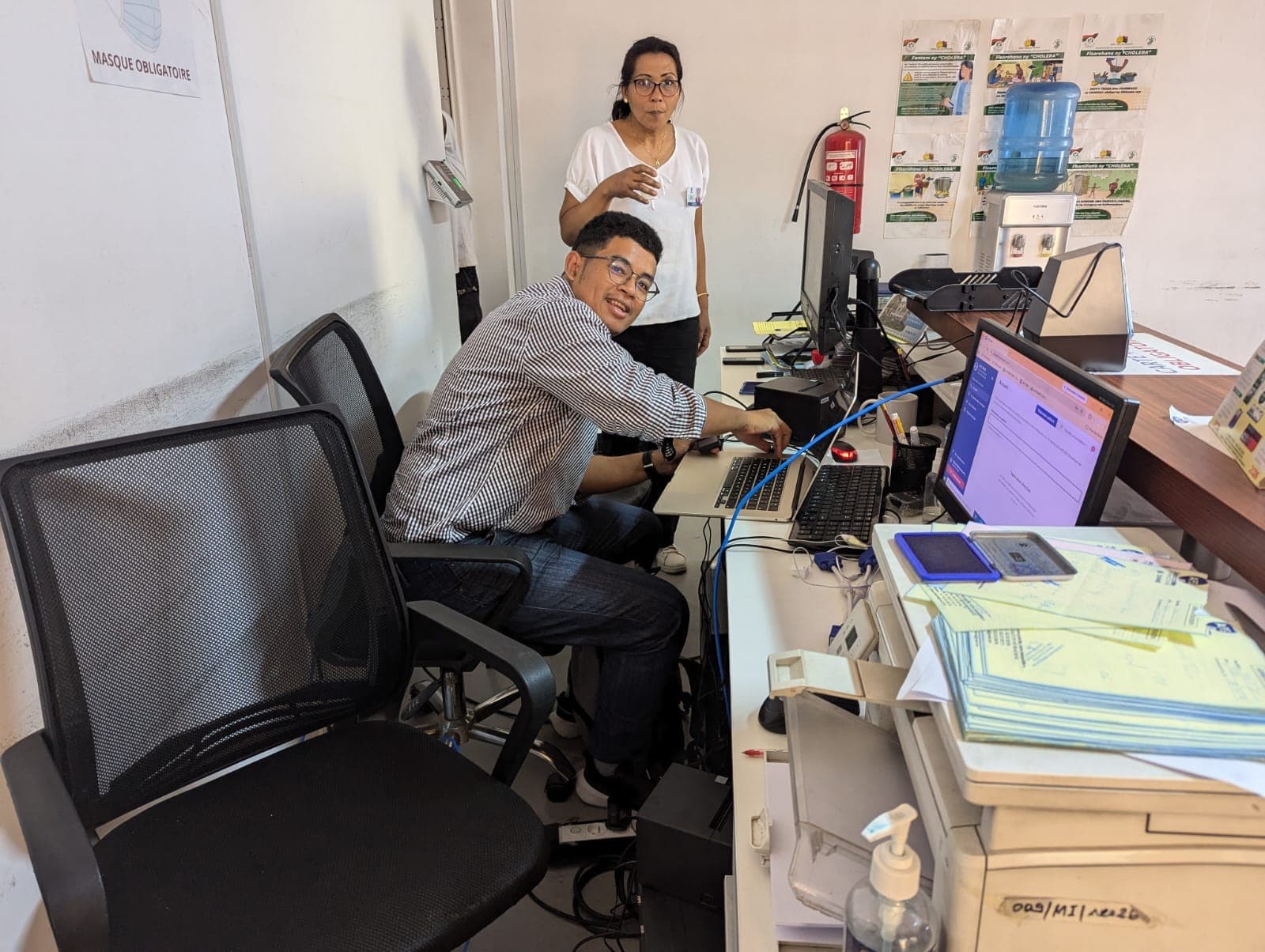
The Andraharo pilot site opened to the public with the platform on 2 November 2026. We had installed and set up the reception workstations on site, with the AFS team.
Training was done role by role: declaration officers, reception, cash desk, doctors. Guided walkthroughs in the platform, manuals for each role, a demo video.
Today, the site manager trains new doctors herself. That is our measure of success: the tool belongs to the team, not to us.
- February 2026Field audit: 4 processes, 5 requirement documents
- 8 October 2026Board presentation, live demo
- 28 October 2026Production release
- 2 November 2026Andraharo site opens to the public
The first nine days.
260
patients received on the platform in 7 working days, 2 to 10 November
8 min
median wait between arrival and the doctor's call
28
changes requested by the teams, delivered in 10 days
500+
member companies migrated into the platform
What matters most is not the 8-minute figure, it is that the figure exists. Before, out of 111,921 visits in the paper registers, the exit time was noted only 79 times. Management can now follow waiting time day by day, and decide on data.
Source: AFS platform, aggregated data from 2 to 10 November 2026.
What this project taught us.
- 01
Real data never looks like the sample.
Company DNS files are very heterogeneous Excel files. Rather than hoping for clean files, we added a safeguard that blocks a suspicious import before it touches employees' entitlements.
- 02
A good plan survives change.
The pilot site changed 12 days before launch. Because the platform was designed for multiple sites from day one, the date held.
- 03
Always have a plan B.
A paper fallback was ready for launch day. Teams open with more confidence when they know they will never be stuck.
- 04
Privacy is designed from the first screen.
In a medical centre, no patient name should appear on a TV screen. Hence visit numbers: patients know it is their turn, and nobody else knows who they are.
Module by module, across the whole organisation.
The patient journey is only the first module. The roadmap was presented to the board, and each step follows the same method: deliver, train, measure.
- Week of 23 November 2026Dentistry, nursing care and ophthalmology
- End of January 2027Pharmacy and the doctor's tool
- End of March 2027Collections
- End of April 2027Care coverage
- End of May 2027Portals
Which process costs you the most? Let's start there.
Two hours with you, on a single process. You leave with a 3-page note, a frank opinion, and no obligation to go further.
A tight-knit team based in Antananarivo. You talk directly to the people who design and build your tool, from the first meeting to maintenance.
or write to us: [email protected]
or on WhatsApp: +261 34 24 764 71